Webinars And Videos
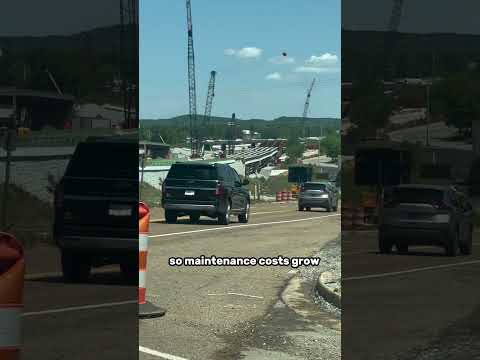
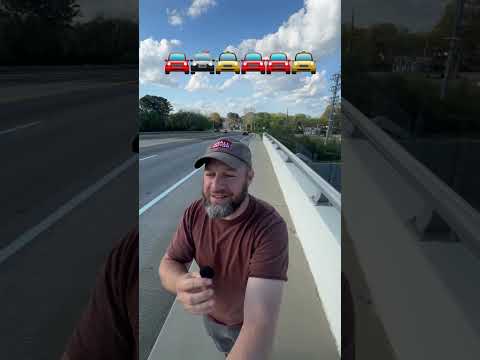
- WHY are we always expanding Highways??
 by Strong Towns on April 23, 2026 at 8:00 pm
Highways were built to connect places. That mission was accomplished decades ago. So why do they keep expanding?
- This pizza shop hacked NYC rulesby Strong Towns on April 21, 2026 at 8:00 pm
When outdoor dining disappeared, this Brooklyn pizzeria found a clever workaround— but it reveals something important. The city tried to introduce better standards for outdoor dining. At the same time, thousands of restaurants removed setups that were already working, and many waited months for approval to rebuild.
- $300 million for MORE lanes?? But BILLIONS needed for crumbling roads??by Strong Towns on April 20, 2026 at 8:00 pm
$300M for one interchange—while thousands of existing roads and bridges fall apart. There’s a better approach: maintain first, expand second.
- The Most Deadly Cityby Strong Towns on April 17, 2026 at 8:00 pm
Learn how to actually make your communities’ streets safer (IRL!!). Join Kelsey and many others at the Strong Towns National Gathering in Fayetteville, Arkansas | May 18–20
- How Utah Is Protecting Drinking Water from Wildfires | A New Resilience Modelby World Resources Institute on April 17, 2026 at 6:52 pm
Wildfires in Utah threaten drinking water, communities, and ecosystems. Here’s how the Utah Resilience Fund is helping protect the Weber Watershed and the Great Salt Lake through proactive forest restoration. Across northern Utah, communities at high risk of wildfire are reshaping the landscape through coordinated restoration projects. The Utah Resilience Fund brings together public, private, and philanthropic partners to reduce wildfire risk before disaster strikes. By pooling funding and aligning work across public and private lands, this model is accelerating forest restoration to protect lives, homes, jobs, drinking water, and ecosystems. 👉🔗Learn more about Utah wildfire risk reduction https://www.wri.org/insights/utah-pioneers-new-model-wildfire-resilience 👉🔗Learn more about the Utah Resilience Fund financing model that invests in forest restoration to reduce wildfire risk and protect water supplies https://cities4forests.com/project/the-utah-resilience-fund/. Footage by Natasha Collins, James Anderson, and Summit County. Production and editing by Courtney Blackmer-Raynolds and Natasha Collins. #Wildfires #Utah #ForestRestoration #WaterSecurity #ClimateResilience — This WRI Cities4Forests work delivers lasting outcomes for both people and nature with support from our partners, including Summit County, the U.S. Forest Service, Weber Basin Water Conservancy District, Mountain Regional Water District, the Utah Division of Forestry, Fire and State Lands, Utah’s Shared Stewardship, Utah’s Watershed Restoration Initiative, Representative Black Moore, Salt Lake City Department of Public Utilities, Trout Unlimited, and the Caterpillar Foundation. WRI’s Cities4Forests initiative helps cities and communities around the world use nature to solve problems. For more information, visit https://cities4forests.com/. — 🌍 Official website: https://www.wri.org/ 🔗LinkedIn: https://www.linkedin.com/company/world-resources-institute 📱 Instagram: https://www.instagram.com/worldresources/ 🙏🏼 Facebook: https://www.facebook.com/worldresources/ 🦋 Bluesky: https://bsky.app/profile/worldresources.bsky.social 🐦 Twitter: https://x.com/WorldResources 🌎 Sign up for the WRI Digest: https://go.wri.org/4hwQ0Kp
- This suburb isn’t what you thinkby Strong Towns on April 16, 2026 at 8:00 pm
Ardmore, PA shows what’s possible when small decisions add up: opening access to shared spaces, turning parking lots into parks, and supporting local places people can actually walk to.
- Underbuilding Cities Vs. Overbuildingby Strong Towns on April 15, 2026 at 8:00 pm
For years, the mindset was: demand will grow, so build bigger. Now that same thinking is creating problems.
- $900M for 3 Minutes?! And other roads are crumbling??by Strong Towns on April 14, 2026 at 8:00 pm
A $900M highway to save 3 minutes, for 235 drivers a day. Projects like this aren’t happening by accident. This is a textbook example of the broken federal funding system driving marginal, costly, and destructive local investments simply because the money is available and there was once a line on paper.
- If your city feels stuck do thisby Strong Towns on April 13, 2026 at 8:00 pm
Learn how to actually make your community stronger (IRL!!). Fayetteville Arkansas | May 18–20
- too much road, not enough valueby Strong Towns on April 9, 2026 at 8:00 pm
Sometimes the biggest financial fix isn’t adding more—it’s removing what you don’t need. What would you do with the extra space?
- The city blocked this streetby Strong Towns on April 8, 2026 at 7:00 pm
Connectivity isn’t just design—it’s a long-term commitment to a stronger, more resilient community.
- Why This Street Became a Mini-Highwayby Strong Towns on April 7, 2026 at 8:15 pm
Two streets. Same city. Same traffic. Completely different outcomes. The difference isn’t demand—it’s funding. When street design is tied to highway-style standards, you get highway-style streets… even where they don’t belong.
- Flint, MI, replaced its city with parkingby Strong Towns on April 3, 2026 at 8:00 pm
We often assume tearing things down is the first step toward progress. But in places like Flint, demolition didn’t lead to renewal—it led to empty space. What if progress looked different? Less demolition, more reinvestment.
- I Walked 100K Steps in One Cityby Strong Towns on April 2, 2026 at 8:00 pm
What happens when you explore a city entirely on foot? St. Pete made it easy for the most part—miles of sidewalks, local shops, art everywhere, and small details that make a big difference (like accessible curbs and connected trails). The more a place invites you to walk, the more you notice… and the more you want to stay.
- This Land Is Only Used Twice a Weekby Strong Towns on April 1, 2026 at 8:00 pm
Ever noticed how much space we dedicate to parking… and that sometimes it only gets used a few hours a week? What if that same land could serve the community more routinely?
- The Secret to Business-Friendly Citiesby Strong Towns on March 31, 2026 at 6:00 pm
Growth doesn’t always mean expanding outward. Sometimes it means investing deeper—into people, businesses, and neighborhoods. West Allis is doing exactly that. Are you voting for them to win the Strongest Town Contest?
- Foundational Court Taking – from Planetizen Courses’ Federal Takings Lawby Planetizen on March 30, 2026 at 9:41 pm
Understand the concept of the Loretto and its roll in Federal Takings Law with Planetizen Courses https://courses.planetizen.com/course/federal-takings-law
- 10 Years, 10 Voicesby World Resources Institute on March 19, 2026 at 12:29 pm
What does a decade of change look like? For us, it’s how we’ve grown, what we’ve learned, and how we’ve stood together through every moment, all driven by the strong belief that a better world – respecting communities and planetary boundaries – is within reach. World Resources Institute Europe is celebrating its 10th anniversary. This is more than a milestone; it’s a promise for the next decade. In this anniversary year, we’re bringing you behind the scenes of our mission for people, nature, and climate. Introducing “10 Years, 10 Voices” a new series featuring the people behind Europe’s next decade of action. From climate resilience to nature restoration, this is our story, told by those who live it every day. 🌍 Official website: https://www.wri.org/wri-europe 🔗 LinkedIn: https://www.linkedin.com/company/wri-europe/ 📱 Instagram: https://www.instagram.com/wrieurope/
- Introducing the Generative AI for Planning Trackby Planetizen on March 17, 2026 at 5:34 pm
This course examines the ethical and equity implications of integrating generative AI into urban planning workflows. Topics include bias in training data, the importance of transparency and accountability, and strategies for building public trust in AI-assisted processes. It also looks ahead to emerging technologies such as digital twins and AI-powered dashboards, concluding the series with hands-on guidance for how planners can begin experimenting with generative AI responsibly in their own work. https://courses.planetizen.com/course/gen-ai-ethics-and-the-future?utm_source=youtube&utm_medium=course-description Subscribe to Planetizen Courses’ channel and enable notifications to keep up with the latest urban planning videos: https://www.youtube.com/c/PlanetizenCourses?sub_confirmation=1 This video is an excerpt from Generative AI, Ethics, and the Future of Urban Planning. Watch the full course here: https://courses.planetizen.com/course/gen-ai-ethics-and-the-future?utm_source=youtube&utm_medium=course-description Planetizen Courses offers hundreds of online urban planning video courses taught by trusted professional planners. Sign up for access to cutting edge urban planning and urban design video courses on computer, phone, or tablet: https://courses.planetizen.com/course/gen-ai-ethics-and-the-future?utm_source=youtube&utm_medium=course-description Follow Planetizen Courses on X: https://x.com/plnzcourses Follow Planetizen Courses on LinkedIn: https://www.linkedin.com/company/planetizen-courses
- WRI Explains: What Is the EU Deforestation Regulation?by World Resources Institute on March 13, 2026 at 8:00 am
🌳At a time when forests are increasingly under threat, it’s urgent to understand the regulation and ensure its full implementation. #WRIExplains what the EU Deforestation Regulation is and answers 8 key questions👉 https://go.wri.org/eudr
- WRI Explains Data Centersby World Resources Institute on March 5, 2026 at 12:00 pm
AI tools like ChatGPT, navigation apps and streaming platforms feel effortless, drawing information seemingly from thin air. Yet the infrastructure behind them is anything but invisible. #WRIExplains Data centers👉 https://go.wri.org/data-centers About WRI: WRI is a global research organization working to improve people’s lives, protect nature and halt climate change. As an independent research organization, we leverage our data, expertise and global reach to influence policy and catalyze change across systems like food, land and water; energy; and cities. Our 2,000+ staff work on the ground in more than a dozen focus countries and with partners in over 50 nations. 🌍 Official website: https://www.wri.org 🔗LinkedIn: https://www.linkedin.com/company/world-resources-institute 📱 Instagram: https://www.instagram.com/worldresources/ 🙏🏼 Facebook: https://www.facebook.com/worldresources/ 🦋 Bluesky: https://bsky.app/profile/worldresources.bsky.social 🐦 Twitter: https://x.com/WorldResources 🌎 Sign up for the WRI Digest: https://go.wri.org/4hwQ0Kp
- WRI Explains: Deep-Sea Miningby World Resources Institute on March 2, 2026 at 4:24 pm
🌊#WRIExplains: Deep-Sea Mining https://go.wri.org/deep-sea-mining Deep sea mining, an activity involving the collection of minerals from the ocean floor, is gaining attention as experts estimate vast undiscovered resources. While companies currently harvest minerals on land, concerns are growing about the potential environmental impact of deep sea mining, which is not yet well-understood. The International Seabed Authority is working to establish regulations for this activity, with many warning of harm to marine life and coastal communities. Minerals such as lithium, cobalt, nickel and rare earth elements are essential ingredients in everything from wind turbines and electric vehicles to cell phones, medical technologies and military infrastructure. Mining for these materials on land is already well established, but with demand surging, some are now looking to tap the seafloor for its millions of square kilometers of metal ores. Some countries and companies have already begun exploring underwater mineral deposits and mining techniques — but the prospect of deep-sea mining remains controversial. Despite years of research, little is known about the deep ocean. Many fear that extracting minerals from it could pose grave consequences for both marine life and planetary health. While nations can currently pursue deep-sea mining in their own domestic waters, the world is still awaiting exploitation regulations from the UN’s International Seabed Authority (ISA) that will dictate whether and how it could proceed in international waters, where the bulk of the ocean’s critical minerals are found. With the future of deep-sea mining still under debate, here’s what we know so far about the proposed practice and its impacts — and what we don’t. Learn more: https://go.wri.org/deep-sea-mining
- Practical Applications of Generative AI for Urban Planningby Planetizen on February 23, 2026 at 6:43 pm
This course explains the foundational technologies behind generative AI, including GANs (Generative Adversarial Networks), VAEs (Variational Autoencoders), and LLMs (Large Language Models). The tutorial goes beyond the theoretical by applying each model to realistic urban planning tasks — such as redesigning streetscapes, summarizing public comments, and generating development scenarios. Through live demos using free or commonly available AI tools, planners will learn the mechanics behind GenAI and build the confidence to explore these tools in their own work. Subscribe to Planetizen Courses’ channel and enable notifications to keep up with the latest urban planning videos: https://www.youtube.com/c/PlanetizenCourses?sub_confirmation=1 This video is an excerpt from Generative AI Tools and Workflows for Urban Planning. Watch the full course here: https://courses.planetizen.com/course/generative-ai-tools-and-workflows?utm_source=youtube.com&utm_medium=referral&utm_campaign=description&utm_content=generativeai-2&utm_source=youtube&utm_medium=video-description Planetizen Courses offers hundreds of online urban planning video courses taught by trusted professional planners. Sign up for access to cutting edge urban planning and urban design video courses on computer, phone, or tablet: https://courses.planetizen.com/courses?utm_source=youtube.com&utm_medium=referral&utm_campaign=plnzc-cta-description&utm_content=generativeai-2 Follow Planetizen Courses on X: https://x.com/plnzcourses Follow Planetizen Courses on LinkedIn: https://www.linkedin.com/company/planetizen-courses
- WRI Explains Carbon Removalby World Resources Institute on February 12, 2026 at 11:00 pm
Carbon removal could help prevent the worst impacts of climate change. #WRIExplains further: https://go.wri.org/carbon-removal About WRI: WRI is a global research organization working to improve people’s lives, protect nature and halt climate change. As an independent research organization, we leverage our data, expertise and global reach to influence policy and catalyze change across systems like food, land and water; energy; and cities. Our 2,000+ staff work on the ground in more than a dozen focus countries and with partners in over 50 nations. 🌍 Official website: https://www.wri.org 🔗LinkedIn: / world-resources-institute 📱 Instagram: / worldresources 🙏🏼 Facebook: / worldresources 🦋 Bluesky: https://bsky.app/profile/worldresourc… 🐦 Twitter: https://x.com/WorldResources 🌎 Sign up for the WRI Digest: https://go.wri.org/4hwQ0Kp
- Utah Pioneers a New Model for Wildfire Resilienceby World Resources Institute on February 10, 2026 at 9:59 am
Watch the updated version here: https://www.youtube.com/watch?v=DVCOnu1XcoY Wildfires in Utah threaten drinking water, communities, and ecosystems. Here’s how the Utah Resilience Fund is helping protect the Weber Watershed and the Great Salt Lake through proactive forest restoration. Across northern Utah, communities at high risk of wildfire are reshaping the landscape through coordinated restoration projects. The Utah Resilience Fund brings together public, private, and philanthropic partners to reduce wildfire risk before disaster strikes. By pooling funding and aligning work across public and private lands, this model is accelerating forest restoration to protect lives, homes, jobs, drinking water, and ecosystems. 👉🔗Learn more about Utah wildfire risk reduction https://www.wri.org/insights/utah-pioneers-new-model-wildfire-resilience 👉🔗Learn more about the Utah Resilience Fund financing model that invests in forest restoration to reduce wildfire risk and protect water supplies https://cities4forests.com/project/the-utah-resilience-fund/. Footage by Natasha Collins, James Anderson, and Summit County. Production and editing by Courtney Blackmer-Raynolds and Natasha Collins. #Wildfires #Utah #ForestRestoration #WaterSecurity #ClimateResilience — This WRI Cities4Forests work delivers lasting outcomes for both people and nature with support from our partners, including Summit County, the U.S. Forest Service, Weber Basin Water Conservancy District, Mountain Regional Water District, the Utah Division of Forestry, Fire and State Lands, Utah’s Shared Stewardship, Utah’s Watershed Restoration Initiative, Representative Black Moore, Salt Lake City Department of Public Utilities, Trout Unlimited, and the Caterpillar Foundation. WRI’s Cities4Forests initiative helps cities and communities around the world use nature to solve problems. For more information, visit https://cities4forests.com/. — 🌍 Official website: https://www.wri.org/ 🔗LinkedIn: https://www.linkedin.com/company/world-resources-institute 📱 Instagram: https://www.instagram.com/worldresources/ 🙏🏼 Facebook: https://www.facebook.com/worldresources/ 🦋 Bluesky: https://bsky.app/profile/worldresources.bsky.social 🐦 Twitter: https://x.com/WorldResources 🌎 Sign up for the WRI Digest: https://go.wri.org/4hwQ0Kp
- How Solar Power is Changing the Lives of Farmers in Berbere, Ethiopiaby World Resources Institute on February 3, 2026 at 3:17 pm
What happens when solar power meets farming? For years, farmers in Berbere Woreda in southeastern Ethiopia lived hand to mouth — not because water was scarce, but because they didn’t have access to a reliable, affordable energy source. Although nearby rivers flowed year-round, the lack of power meant they couldn’t pump water to their fields. As a result, most families harvested only once a year, producing barely enough to feed themselves. Today, that story is changing. With technical support from WRI and DanChurchAid, and funding from the IKEA Foundation, farmers now have access to solar-powered irrigation. This clean, reliable energy is enabling them to grow crops three to four times a year — transforming agriculture from a struggle for survival into a pathway to prosperity. For the first time, farmers are earning income, planning for the future, and building resilience for their families and communities. This is their story. 👉🔗Learn more about how this simple but powerful solution is transforming agriculture and why it could reshape food systems across Africa and beyond https://www.wri.org/insights/solar-transforms-farming-berbere-ethiopia #renewableenergy #agriculturefarming #communitydevelopment — 🌍 Official website: https://www.wri.org/ 🔗LinkedIn: https://www.linkedin.com/company/world-resources-institute 📱 Instagram: https://www.instagram.com/worldresources/ 🙏🏼 Facebook: https://www.facebook.com/worldresources/ 🦋 Bluesky: https://bsky.app/profile/worldresources.bsky.social 🐦 Twitter: https://x.com/WorldResources 🌎 Sign up for the WRI Digest: https://go.wri.org/4hwQ0Kp
- Stories to Watch 2026: Live Event with Panel Discussionby World Resources Institute on January 29, 2026 at 8:17 pm
For more than 20 years, WRI has identified annual “Stories to Watch.” These are the year’s moments, issues and decisions that we believe will shape the future trajectory of the world. Stories to Watch 2026 explores how the choices we make can deliver real benefits for people—not just decades from now, but today. Will the energy transition stall economic progress or ignite a new era of inclusive prosperity? Will climate action deepen today’s cost-of-living and housing crises—or become a pathway to affordability? Will jobs in the new economy open doors to a brighter future for families everywhere—or leave too many behind? Don’t miss the live panel discussion at the end. In this interactive conversation, WRI experts and global leaders unpack the trends, risks, and opportunities that will define the year ahead, offering insights you won’t find in the headlines alone. Together, they examine what’s at stake, what’s changing, and where bold action can make the biggest difference. A correction: When we mention the death toll in Jamaica as a result of Hurricane Melissa, the correct number should be 45. About WRI: WRI is a global research organization working to improve people’s lives, protect nature and halt climate change. WRI works to improve people’s lives, protect and restore nature and stabilize the climate. As an independent research organization, we leverage our data, expertise and global reach to influence policy and catalyze change across systems like food, land and water; energy; and cities. Our 2,000+ staff work on the ground in more than a dozen focus countries and with partners in over 50 nations. 🌍 Official website: https://www.wri.org 🔗LinkedIn: https://www.linkedin.com/company/world-resources-institute 📱 Instagram: https://www.instagram.com/worldresources/ 🙏🏼 Facebook: https://www.facebook.com/worldresources/ 🦋 Bluesky: https://bsky.app/profile/worldresources.bsky.social 🐦 Twitter: https://x.com/WorldResources 🌎 Sign up for the WRI Digest: https://go.wri.org/4hwQ0Kp
- Will Climate Action Kill Jobs — or Create Them?by World Resources Institute on January 29, 2026 at 6:54 pm
*Jobs. Skills. Economic security.* Few things are scarier than losing a job. As the global economy transitions, millions of jobs will disappear — but millions more will be created. The real question is how many people are prepared for the change. In this video, Ani Dasgupta, President and CEO of World Resources Institute examines how climate action is reshaping jobs across sectors — where jobs will be lost, where new opportunities are emerging, and why reskilling is now one of the biggest economic challenges of the decade. *This video explores:* • How many jobs will be lost — and how many will be created • Why job “churn,” not unemployment, is the real challenge • What the transition means for manufacturing, agriculture, and construction • How reskilling can protect workers, families, and local economies You’ll hear evidence and examples from India, Germany, and beyond — including how electric vehicle manufacturing and workforce training can open new opportunities, especially for women. This video is part of *Stories to Watch 2026*, WRI’s annual briefing on the trends shaping the year ahead. ▶ Watch the full Stories to Watch 2026 briefing: https://www.youtube.com/watch?v=KNUKou0gFxE&t=30s *Chapters* 00:11 Why jobs are the biggest fear in any transition 00:43 How many jobs will be lost — and gained 01:41 Why job “churn” matters more than unemployment 03:39 India: reskilling workers for the EV transition 06:06 New opportunities for women and small businesses 07:42 Germany’s Ruhr Valley: rebuilding after coal 08:22 The global skills gap 09:12 Why workforce planning is falling behind 10:27 How AI could reshape jobs in the new economy 11:36 Why people must be at the center of the transition About WRI: WRI is a global research organization working to improve people’s lives, protect nature and halt climate change. As an independent research organization, we leverage our data, expertise and global reach to influence policy and catalyze change across systems like food, land and water; energy; and cities. Our 2,000+ staff work on the ground in more than a dozen focus countries and with partners in over 50 nations. 🌍 Official website: https://www.wri.org 🔗LinkedIn: https://www.linkedin.com/company/world-resources-institute 📱 Instagram: https://www.instagram.com/worldresources/ 🙏🏼 Facebook: https://www.facebook.com/worldresources/ 🦋 Bluesky: https://bsky.app/profile/worldresources.bsky.social 🐦 Twitter: https://x.com/WorldResources 🌎 Sign up for the WRI Digest: https://go.wri.org/4hwQ0Kp Creative Commons licensed footage courtesy of WEGA WA GWITU TV/Youtube, The Traveler Ke/YouTube, Uncharted Safari/YouTube, Blessed YouTuber/YouTube Brazil photos courtesy of agenciaBrazil
- Will the Climate Transition Boost Growth — or Hold Economies Back?by World Resources Institute on January 29, 2026 at 6:54 pm
*Economic growth. Competitiveness. The next global economy.* For most people, the economy is the number one concern. Many leaders worry that climate action could slow growth and make their countries less competitive. Others argue the opposite: that delaying the transition risks falling behind. In this video, Ani Dasgupta, President and CEO of World Resources Institute examines how the climate transition is already reshaping economic growth — and why countries and companies that move faster may gain a lasting advantage. *This video explores:* • Whether clean energy and climate action can accelerate economic growth • Why electric vehicles and new industries are reshaping global markets • How countries like China, Kenya, and Denmark are building competitive advantage • What it takes to finance growth in the new economy You’ll see examples from electrifying transport in Kenya to clean manufacturing, agriculture, and innovation across emerging and advanced economies. This video is part of *Stories to Watch 2026*, WRI’s annual briefing on the trends shaping the year ahead. ▶ Watch the full Stories to Watch 2026 briefing: https://www.youtube.com/watch?v=KNUKou0gFxE&t=30s *Chapters* 00:00 Why growth and competitiveness drive climate decisions 00:26 Europe, the U.S., and fears of falling behind 01:46 EVs and the future of global markets 02:28 Can climate action actually boost growth? 03:09 China’s clean energy strategy 03:45 Kenya: electrifying transport from the bottom up 06:36 Denmark and business-led growth 07:52 Can countries grow and decarbonize at the same time? 08:27 Financing growth in the new economy 09:30 Clean industrialization and green steel 10:12 Innovation and entrepreneurship 11:10 What to watch for in 2026 *About WRI* WRI is a global research organization working to improve people’s lives, protect nature and halt climate change. As an independent research organization, we leverage our data, expertise and global reach to influence policy and catalyze change across systems like food, land and water; energy; and cities. Our 2,000+ staff work on the ground in more than a dozen focus countries and with partners in over 50 nations. 🌍 Official website: https://www.wri.org 🔗LinkedIn: https://www.linkedin.com/company/world-resources-institute 📱 Instagram: https://www.instagram.com/worldresources/ 🙏🏼 Facebook: https://www.facebook.com/worldresources/ 🦋 Bluesky: https://bsky.app/profile/worldresources.bsky.social 🐦 Twitter: https://x.com/WorldResources 🌎 Sign up for the WRI Digest: https://go.wri.org/4hwQ0Kp Creative Commons licensed footage courtesy of WEGA WA GWITU TV/Youtube, The Traveler Ke/YouTube, Uncharted Safari/YouTube, Blessed YouTuber/YouTube Brazil photos courtesy of agenciaBrazil
- Climate Change and the Cost of Livingby World Resources Institute on January 29, 2026 at 6:54 pm
*Cost of living. Housing. Energy prices.* Climate change is no longer a distant concern — it’s affecting the cost of everyday life. From housing and electricity bills to insurance and transport, affordability has become one of the biggest economic challenges facing families worldwide. In this video, Ani Dasgupta, President and CEO of World Resources Institute examines how climate change and the global economic transition are reshaping affordability — and whether climate action can actually help lower costs over time. *This video explores:* • Why housing is the world’s biggest affordability crisis • How climate risks are driving up insurance and living costs • What Brazil and cities around the world are doing to deliver affordable, resilient housing • Why cheaper renewables could lower energy prices — and where new risks are emerging This video is part of Stories to Watch 2026, WRI’s annual briefing on the trends shaping the year ahead. ▶ Watch the full Stories to Watch 2026 briefing: https://www.youtube.com/watch?v=KNUKou0gFxE&t=30s *Chapters* 00:00 Why affordability is the real concern 01:14 Housing: the world’s biggest cost-of-living crisis 02:17 Why housing is also a climate issue 03:11 Brazil: upgrading housing where people already live 05:55 What affordable, resilient housing looks like 07:35 Energy prices, electricity demand, and renewables 09:52 Trade, energy costs, and global uncertainty 10:42 Can climate action make life more affordable? *About WRI* WRI is a global research organization working to improve people’s lives, protect nature and halt climate change. As an independent research organization, we leverage our data, expertise and global reach to influence policy and catalyze change across systems like food, land and water; energy; and cities. Our 2,000+ staff work on the ground in more than a dozen focus countries and with partners in over 50 nations. 🌍 Official website: https://www.wri.org 🔗LinkedIn: https://www.linkedin.com/company/world-resources-institute 📱 Instagram: https://www.instagram.com/worldresources/ 🙏🏼 Facebook: https://www.facebook.com/worldresources/ 🦋 Bluesky: https://bsky.app/profile/worldresources.bsky.social 🐦 Twitter: https://x.com/WorldResources 🌎 Sign up for the WRI Digest: https://go.wri.org/4hwQ0Kp Creative Commons licensed footage courtesy of WEGA WA GWITU TV/Youtube, The Traveler Ke/YouTube, Uncharted Safari/YouTube, Blessed YouTuber/YouTube Brazil photos courtesy of agenciaBrazil