Webinars And Videos
- How Interstates Changed Where America Eats
 by Strong Towns on October 23, 2026 at 8:30 pm
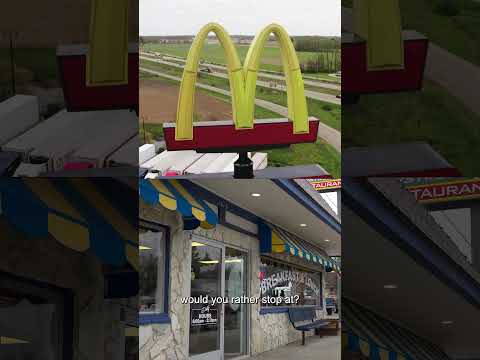
Interstates move travelers quickly between cities, but their exit-based design also gives national chains an advantage over the local restaurants and diners that once lined older highways.
- Negotiating A Great Salary for Urban Plannersby Planetizen on October 23, 2026 at 4:00 pm
Learn how to secure the best salary you can and drive your career growth as a planner together with Corrin Wendell in her new course, “Salary Negotiation & Strategic Career Growth for Planners.” Urban planners spend their careers advocating for communities — but many struggle to advocate for themselves. Early-career professionals often enter negotiations for salaries, promotions and professional opportunities without the tools or confidence to communicate their value. Participants will explore compensation trends in planning, understand how negotiation works in both public and private sector contexts, and practice framing their value using data and storytelling. The course also covers common negotiation scenarios including starting salaries, raises, promotions and professional development support. Participants will develop a personalized career strategy, including a 90-day growth plan and a portfolio of accomplishments that demonstrates impact and readiness for advancement. By the end of the course, planners will feel better prepared to advocate for equitable compensation, build professional confidence and intentionally shape their career trajectory. Subscribe to Planetizen Courses’ channel and enable notifications to keep up with the latest urban planning videos: https://www.youtube.com/@PlanetizenHQ This video is an excerpt from Salary Negotiation & Strategic Career Growth for Planners. Watch the full course here: https://courses.planetizen.com/course/own-your-worth?utm_source=youtube.com&utm_medium=referral&utm_campaign=card&utm_content=Negotiating+A+Great+Salary+for+Urban+Planners Planetizen Courses offers hundreds of online urban planning video courses taught by trusted professional planners. Sign up for access to cutting edge urban planning and urban design video courses on computer, phone, or tablet: https://courses.planetizen.com/user/register?plan_id=free Follow Planetizen Courses on X: https://x.com/plnzcourses Follow Planetizen Courses on LinkedIn: / planetizen-courses
- What are all these big bike rides about?by Strong Towns on October 22, 2026 at 8:30 pm
They’re showing that cars aren’t the only ways to get around a city. Some people, for a variety of reasons, might get around on bike. Have you been part of a critical mass ride? What’s been your experience?
- Food waste and carbon emissionsby World Resources Institute on October 22, 2026 at 4:02 pm
We’ve teamed up with IKEA Foundation for this year’s IKEA Foundation Week campaign, Can You Save the Tomato?, to help people rethink food. In the campaign, our colleague Dr Susan Chomba explains how the way we produce, distribute and consume food affects our climate, and shares solutions to reduce waste and emissions. Hear from Susan and see if you can save the tomato at SaveTheTomato.org. #IFW26
- WRI Explains The Super El Niñoby World Resources Institute on October 21, 2026 at 3:02 pm
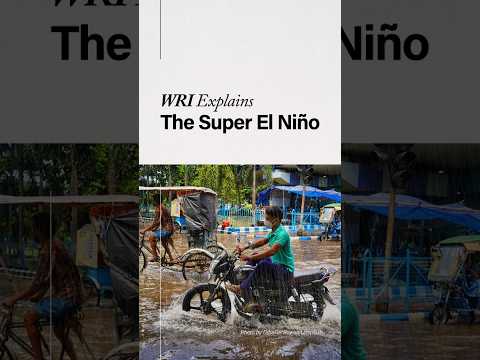
What is a ‘Super El Niño’? How might it affect food, forests and water? #WRIExplains👉 https://go.wri.org/super-el-nino
- Phoenix Has Too Much Parkingby Strong Towns on October 20, 2026 at 9:00 pm
Phoenix has 12.2 million parking spaces, about four for every car in the city. Parking lots can hit 160°F in summer, and across the city, that pavement can raise temperatures by as much as nine degrees.
- How To Ask For A Raiseby Planetizen on October 20, 2026 at 4:40 pm
Asking for a raise can be incredibly daunting, but there’s plenty of things you can do to prepare so it goes well. Corrin Wendell shares her best tips here, as well as many more in her new course, Salary Negotiations & Strategic Career Growth for Planners.
- Planning Data Center Growth Responsiblyby World Resources Institute on October 20, 2026 at 3:00 pm
Local priorities should be central to data center development. The local impacts of data centers have taken center stage in U.S. media as people are eager to protect their communities from irresponsible water use, climbing electricity prices and pollution. Many communities with data centers in their backyard are already facing above-average environmental burdens. But data centers can support local communities with early engagement and community benefits agreements (CBAs). Read more about the local impacts of data centers: https://go.wri.org/data-center-impacts-yt Dive deeper into the technical possibilities of CBAs for data centers: Powering Progress: https://go.wri.org/data-center-dev-yt
- This Street Got a Whole New Purposeby Strong Towns on October 19, 2026 at 8:00 pm
A small town in West Virginia is showing how rethinking an existing street can create an entirely new space for the community.
- A Smarter Way to Fix Our Streetsby Strong Towns on October 16, 2026 at 8:30 pm
What if fixing our streets meant removing unnecessary pavement instead of replacing it?
- 5 Transit Ideas More Cities Should Tryby Strong Towns on October 15, 2026 at 8:45 pm
Some transit ideas solve a practical problem, while others make the system more inviting, and these five ideas from around America show how small changes can give more people reasons to ride.
- 2025 APA Planners’ Salary Breakdownby Planetizen on October 15, 2026 at 4:38 pm
One of the most effective steps when negotiating salary is doing your research beforehand to understand how much your peers are making. Corrin Wendell digs into the trove of data provided by the 2025 APA Planners’ Salary and Benefits Survey, breaking down all kinds of demographics to find out how much you should be getting paid. Learn more in her new course, Salary Negotiation & Strategic Career Growth for Planners.
- What Makes a City Feel Like Home?by Strong Towns on October 14, 2026 at 8:45 pm
The best communities are places where neighbors know each other, people feel connected, and everyone has an opportunity to make a difference.
- This Intersection Has a Secretby Strong Towns on October 13, 2026 at 8:30 pm
Decreasing the speed limit by five miles per hour won’t slow drivers if the design of the road itself still encourages speed. Repeated crashes demand physical changes that make safer speeds part of how the street works.
- The Gender Pay Gap For Women In Planningby Planetizen on October 9, 2026 at 4:36 pm
How much do women in planning make when compared to men? Corrin Wendell breaks down the numbers in her new course, Salary Negotiation & Strategic Career Growth for Planners. #planetizen #careergrowth #womeninplanning
- Early-Career Planning Skills School Didn’t Teach Youby Planetizen on October 9, 2026 at 4:30 pm
This practical course offers an essential “land use toolbox” for early-career planners working in both the public and private sectors that outlines how core planning processes, from permits and development reviews to public meetings and everyday counter interactions, actually work in practice. https://courses.planetizen.com/course/the-first-five-years?utm_source=youtube.com&utm_medium=referral&utm_campaign=description&utm_content=Early-Career+Planning+Skills+School+Didn%27t+Teach+You Subscribe to Planetizen Courses’ channel and enable notifications to keep up with the latest urban planning videos: https://www.youtube.com/c/PlanetizenCourses?sub_confirmation=1 This video is an excerpt from [“course name”]. Watch the full course here: https://courses.planetizen.com/course?utm_source=youtube.com&utm_medium=referral&utm_campaign=description&utm_content=video-title Planetizen Courses offers hundreds of online urban planning video courses taught by trusted professional planners. Sign up for access to cutting edge urban planning and urban design video courses on computer, phone, or tablet: https://courses.planetizen.com/courses?utm_source=youtube.com&utm_medium=referral&utm_campaign=plnzc-cta-description&utm_content=video-title Follow Planetizen Courses on X: https://x.com/plnzcourses Follow Planetizen Courses on LinkedIn: https://www.linkedin.com/company/planetizen-courses
- Highway Funding Expires Dec 11, Then What?by Strong Towns on October 8, 2026 at 8:30 pm
With another highway funding deadline coming, Congress has a chance to stop treating a completed interstate-building project like an endless one.
- Why Do Main Streets Always Look The Same?by Strong Towns on October 6, 2026 at 8:45 pm
After 1956, every state dollar spent on federal highways could bring nine more from Washington. That incentive helped turn many traditional Main Streets into routes for high-speed through-traffic, weakening the local businesses and community life those streets had long supported.
- This Should Be Legal Everywhereby Strong Towns on October 5, 2026 at 8:00 pm
Building a house on a smaller lot shouldn’t be a radical idea.
- Billions For Highwaysby Strong Towns on October 2, 2026 at 7:00 pm
A transportation budget can find hundreds of millions for highway expansion, and somehow the smaller projects are where the money gets tight. More often than not, expansion is assumed to be necessary, while smaller safety fixes and other worthwhile transportation projects have to prove why they deserve funding at all.
- Street Design Can Prevent Tragedyby Strong Towns on October 1, 2026 at 7:00 pm
Street safety is about more than individual choices. How we design our streets can help prevent tragedies before they happen.
- What does it take to make resilient food systems possible at scale?by World Resources Institute on October 1, 2026 at 1:21 pm
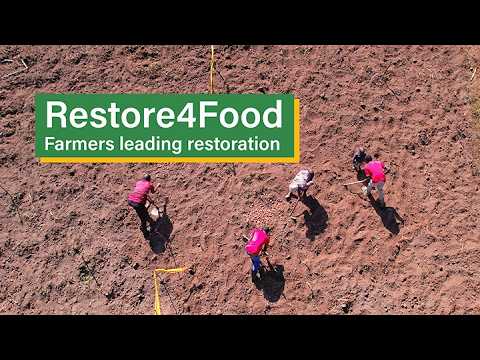
Our Restoration for Food (Restore4Food) Program is exploring that question alongside farmers and partners connecting local knowledge and evidence with finance, markets, policy, research and partnerships. 🌱 Explore Restore4Food: https://bit.ly/3TOvTAz 🤝 Interested in working with us? FoodTeamWRIAfrica@wri.org
- Why Do Crashes Keep Happeningby Strong Towns on September 30, 2026 at 7:00 pm
Pedestrian deaths are still 72% higher than they were in 2009. Even with the recent decline, Smart Growth America estimates that at the current pace it would take until 2042 just to get back to that earlier level.
- Should People Live In Garage Homes?by Strong Towns on September 29, 2026 at 7:00 pm
Adding housing doesn’t always mean building farther out. ADUs can create another home on land that already has streets, utilities, and a neighborhood around it, giving more people a place to live without extending all of that infrastructure somewhere new.
- How to Support Equity With Autonomous Vehicles?by Planetizen on September 29, 2026 at 3:41 pm
Can AVs help bring about a more equitable future? Their adoption could lead to great outcomes for society at large, but planners play a key role in ensuring shared autonomous vehicles are prioritized over private ones. In Jun Wang’s course, Planning Implications and Design for AV Futures, she details key ways that planners can adopt AVs that support society.
- Are Private Autonomous Vehicles Safe?by Planetizen on September 24, 2026 at 3:17 pm
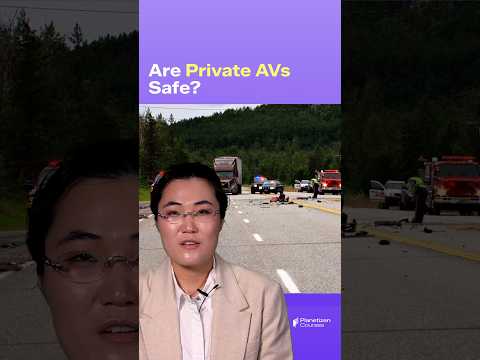
Are autonomous vehicles safe? Depending on how AVs are adopted, there are a wide range of safety outcomes that we see for various demographics. Private fleets, shared fleets, and mixed fleets all will deliver different outcomes for different people. Jun Wang, a researcher in shared autonomous mobility, lays it all out in her course, Planning Implications and Design for AV Futures. #planetizen #autonomousvehicles #planning
- Stories That Changed the World: EMBARQby World Resources Institute on September 21, 2026 at 2:54 pm
What if better transportation could transform a city? EMBARQ was a global network dedicated to helping cities create more sustainable and accessible transportation systems. Founded by the World Resources Institute and built by experts from each target city, EMBARQ worked with governments, businesses, and communities to develop practical solutions for the growing challenges of urban mobility. At a time when rapid urbanization was bringing more cars, congestion, air pollution, and traffic deaths to cities around the world, EMBARQ saw an opportunity to do things differently. The organization helped cities design and implement safer, cleaner, and more efficient transportation systems—from bus rapid transit and bicycle infrastructure to improved road safety and public spaces. By combining research with hands-on work in cities, EMBARQ helped demonstrate that better transportation could improve people’s daily lives while reducing emissions and making cities more equitable. Its work showed that transforming how people move through cities could also transform the cities themselves. #sustainabletransport #transformingtransportation #embarq — Stories that Changed the World is a look back at some of World Resources Institute’s most challenging, impactful and inspiring initiatives of our 40+ year history. For decades WRI has pioneered some of the most effective and innovative solutions to global climate and environmental issues. 👉With EMBARQ, we were on the ground building sustainable transport solutions in congested cities. 👉With the New Climate Economy, we proved that climate action was the growth opportunity of the 21st century. 👉With the Greenhouse Gas Protocol, we gave companies the tools to measure and address their own emissions. https://www.youtube.com/watch?v=vXklGfC7xKw 👉With Global Forest Watch, we used satellite technology and cloud computing to shine a light on exactly where deforestation was happening, in every corner of the earth. https://www.youtube.com/watch?v=dxNMQwKaqoU 👉 With the 20×20 Initiative, we built a network to restore degraded land across Latin America and the Caribbean. Each of these groundbreaking initiatives grew the World Resources Institute, enabling it to harness new technology and new ideas in the fight for people, nature and climate. The initiatives became reality thanks to the vision and energy of WRI’s people, who saw what would make a difference and worked hard to make them happen. These are the stories of those WRI people who made a difference. 🌍 Official website: https://www.wri.org/stories-of-wri 🔗LinkedIn: https://www.linkedin.com/company/world-resources-institute 📱 Instagram: https://www.instagram.com/worldresources/ 🙏🏼 Facebook: https://www.facebook.com/worldresources/ 🦋 Bluesky: https://bsky.app/profile/worldresources.bsky.social 🐦 Twitter: https://x.com/WorldResources 🌎 Sign up for WRI Digest: https://go.wri.org/4hwQ0Kp Special thanks to Wikimedia Commons, EMBARQ, Toni Lindau, Adri Lobo, and Madhav Pai for their video and photos.
- Stories That Changed the World: New Climate Economyby World Resources Institute on September 21, 2026 at 2:54 pm
What if fighting climate change could make economies stronger? The New Climate Economy was a global initiative that set out to answer one of the most important questions of the 21st century: Could the world address climate change while creating jobs, reducing poverty, and improving people’s lives? Led by the Global Commission on the Economy and Climate, with the World Resources Institute as its managing partner, the initiative brought together political leaders, economists, businesses, and researchers to find the answer. NCE’s research demonstrated that investments in clean energy, sustainable cities, efficient transportation, and better land use could create new economic opportunities while reducing greenhouse gas emissions. It showed that a low-carbon future was not simply an environmental necessity—it could also be a pathway to stronger economies, healthier communities, and greater prosperity. 📖 Learn more: https://www.wri.org/stories-changed-world/new-climate-economy 🌍 Website: https://www.wri.org/climate #newclimateeconomy — Stories that Changed the World is a look back at some of World Resources Institute’s most challenging, impactful and inspiring initiatives of our 40+ year history. For decades WRI has pioneered some of the most effective and innovative solutions to global climate and environmental issues. 👉With EMBARQ, we were on the ground building sustainable transport solutions in congested cities. https://youtu.be.com/watch?v=WRfcF5yF8Ss 👉With the New Climate Economy, we proved that climate action was the growth opportunity of the 21st century. 👉With the Greenhouse Gas Protocol, we gave companies the tools to measure and address their own emissions. https://www.youtube.com/watch?v=vXklGfC7xKw 👉With Global Forest Watch, we used satellite technology and cloud computing to shine a light on exactly where deforestation was happening, in every corner of the earth. https://www.youtube.com/watch?v=dxNMQwKaqoU 👉 With the 20×20 Initiative, we built a network to restore degraded land across Latin America and the Caribbean. Each of these groundbreaking initiatives grew the World Resources Institute, enabling it to harness new technology and new ideas in the fight for people, nature and climate. The initiatives became reality thanks to the vision and energy of WRI’s people, who saw what would make a difference and worked hard to make them happen. These are the stories of those WRI people who made a difference. 🌍 Official website: https://www.wri.org/stories-of-wri 🔗LinkedIn: https://www.linkedin.com/company/world-resources-institute 📱 Instagram: https://www.instagram.com/worldresources/ 🙏🏼 Facebook: https://www.facebook.com/worldresources/ 🦋 Bluesky: https://bsky.app/profile/worldresources.bsky.social 🐦 Twitter: https://x.com/WorldResources 🌎 Sign up for WRI Digest: https://go.wri.org/4hwQ0Kp Special thanks to Wikimedia Commons, Vatican Media, Center for Global Development, Global Environment Facility, Global Landscapes Forum, COP20 Lima, and COP24 Katowice.
- How the Nature Economy Can Grow an Inclusive Workforceby World Resources Institute on September 15, 2026 at 5:50 pm
What if Colombia’s transition to a greener economy could also create millions of better jobs? Colombia has the biodiversity, talent and economic potential to build a more inclusive, resilient and competitive future—through renewable energy, sustainable agriculture, nature-based tourism and other emerging industries. But a green economy won’t build itself. It will require smart public policy, investment in skills and training, innovation, and stronger connections between national and local governments. As Colombia develops its next National Development Plan, the opportunity is to make climate action part of a broader strategy for inclusive economic growth—and ensure that the jobs of the future work for people and communities today.
- Will More AVs Help Parking?by Planetizen on September 15, 2026 at 3:45 pm
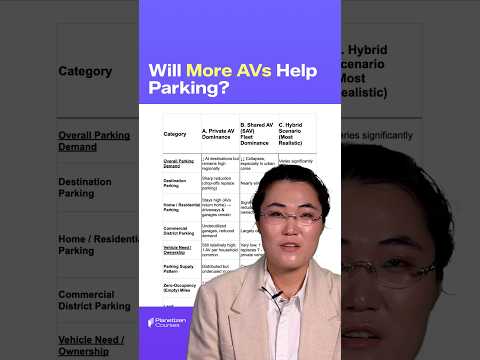
AVs will have a huge impact on parking. Though depending on how they’re adopted, there could be vastly different ways that it changes parking. Come see Jun Wang’s insights onto what our future might look like with different approaches to autonomous vehicles in her new course, Planning Implications and Design for AV Futures. #autonomousvehicles #planetizen #parking